Mold Inspection & Testing for Your Home
Request an estimate from a local provider
A mold inspection is a careful look at your home by a trained provider. They search for mold you can see and mold you cannot. They also look for the water problem behind it. Testing means taking small samples, then sending them to a lab. The lab names the type of mold and how much is there.
Keepscurrent Mold Help is a referral service. It does not inspect or test. It links you with independent providers in the Pacific area who do. People often search for mold inspection near me when they smell something musty or spot a stain. This page explains the steps, the test types, and what drives the price. Look before you leap. Then ask for a quote in writing.
Think you have mold? Start here
See a dark spot? Smell something musty? Take a breath. Most mold problems can be sorted out calmly, in steps.
First, do not scrub it or spray bleach on it. Do not point a fan at it. Both can push spores into other rooms. Spores are the tiny seeds mold uses to spread.
Stop the water if you can
Mold needs moisture. Fix a dripping pipe or shut off the supply. Run a dehumidifier. If your basement floods in spring or after a big storm, check that the sump pump works. A sump pump moves water out of a basement.
Signs an inspection makes sense
Book a visit if any of these sound familiar:
- A musty smell that will not go away
- Stains on walls, ceilings, or around windows
- Peeling paint or warped wood
- A past leak, flood, or roof problem
- Allergy-like symptoms that ease when you leave home
- A home you plan to buy or sell
What a mold inspection is
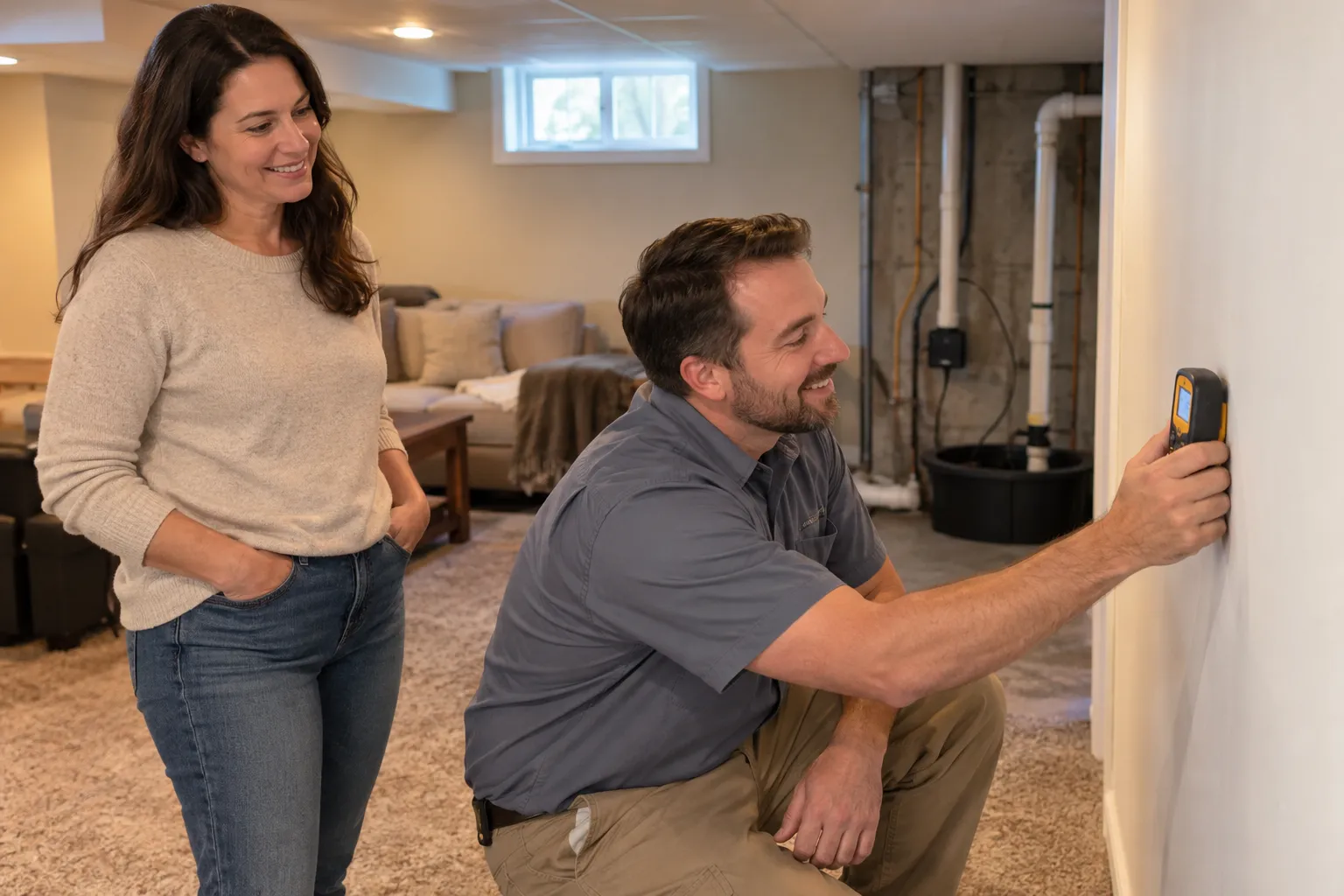
An inspection is a visual check. The provider looks at walls, ceilings, floors, the basement, the attic, and any crawl space. They use a moisture meter. It reads how wet a surface is. Some also use a thermal camera. It shows cold, damp spots behind walls.
What happens during the visit
The provider asks about past leaks and where you notice smells. Then they walk the home. They look first at the places water likes to hide. Many visits take a few hours, based on home size. You get findings and, often, a written report.
Types of mold testing
Testing is not always needed. If mold is plainly visible, some providers skip it. Testing helps when you suspect hidden mold or need proof. Here are the common kinds.
Air samples
A pump pulls air through a small device. A lab counts the spores. Providers often take one outdoors too, for comparison.
Surface samples
The provider swabs or tapes a stain. The lab names the mold on it.
Bulk samples
A small piece of drywall or wood goes to the lab. This shows what is growing inside the material.
What "certified mold testing" means
You will see this phrase a lot. Ask each provider what training or credentials they hold. Ask which lab they use. Ask them to explain it in plain words. Keepscurrent Mold Help makes no claims about any provider's credentials, so check for yourself.
A word on store-bought test kits
These kits are cheap. They often give vague results. Mold spores are in almost every home, so a kit may show mold even when there is no problem. A provider's sampling plan is more useful.
Understanding your results
The lab report lists mold types and amounts. Compare indoor numbers with the outdoor sample. Indoor levels far above outdoors can point to a problem. Ask the provider to explain each line. Some people call the dark kind "black mold." Only a lab can tell you what you actually have.
Inspection and removal: together or apart?
Some companies do both. Others only inspect. Both setups can work. Using a separate inspector gives you an outside view of the problem. Using one company can feel simpler. Know your options, and ask how each provider handles it.
How to get ready for the visit
- Write down when you first noticed the problem
- Note any past leaks, floods, or repairs
- Clear a path to the basement, attic, and closets
- Keep windows closed for a few hours before air tests
- Secure pets
Questions to ask the provider
- What will you check, and what will you sample?
- How many samples do you suggest, and why?
- Which lab will analyze them?
- When will I get the report?
- Will the quote be in writing?
A clear answer is a good sign. Vague answers are a reason to ask again.
What comes next
If the report shows a real problem, the next step is a removal plan. That is a separate job with its own quote. A local provider can lay out the choices. Then you decide.
What's Included
Visual inspection
A provider checks walls, ceilings, basements, and attics for visible mold and signs of hidden moisture.
Moisture and humidity readings
Meters and thermal cameras help find damp spots that your eyes alone cannot see.
Air and surface sampling
Small samples go to a lab to name the mold type and amount.
Written report
You get findings in writing, with plain-word notes on what they mean and what to do next.
What a mold inspection usually costs
Prices vary by home size, the number of samples, and local rates. These are typical U.S. ranges. Always ask for a quote in writing so you know exactly what is included.
| Item | Typical range | Notes |
|---|---|---|
| Visual inspection only | $300 – $600 | Often enough when mold is easy to see |
| Inspection with lab testing | $400 – $1,000 | Includes samples and a written report |
| Each air sample | $50 – $150 | Outdoor comparison sample is common |
| Each surface or bulk sample | $40 – $100 | Price depends on lab and sample type |
| Thermal imaging or moisture mapping | $100 – $400 | Often added when the source is unclear |
| Post-removal clearance test | $200 – $600 | Checks that cleanup worked |
How It Works
Tell us the problem
Share what you see, smell, or suspect, and where it is in your home.
Get matched
Keepscurrent Mold Help connects you with an independent provider in the Pacific area.
Review the quote
The provider explains the inspection and sampling plan, with a written quote.
Read the report, then decide
You get findings and options. Then you choose your next step.
Why Call Keepscurrent Mold Help
Plain-word guidance
We explain your options and likely next steps in simple language, so you know what to expect before anyone visits.
Local providers
Independent providers in your area do the actual work.
Price clarity
Learn what drives the cost so a written quote makes sense.
No obligation
Request an estimate and compare. You decide what happens next.
Other Services
Need mold inspection & testing in Pacific?
Send a quick request to compare options and get a written quote from a local provider. Prefer to talk? Request a callback to check provider availability.
No obligationMold Inspection & Testing FAQ
How do I know if I need a mold inspection?
Consider one if you smell mustiness, see stains, or had a leak or flood. An inspection also helps when buying or selling a home. If you see mold and the cause is obvious, testing may not be needed.
Are DIY mold test kits worth it?
Usually not. Spores are in most homes, so a kit can show mold even when nothing is wrong. A provider's sampling plan and lab report give clearer answers.
Will homeowners insurance pay for a mold inspection?
It depends on your policy and the cause. Some policies may cover sudden damage, such as a burst pipe. Slow leaks are often excluded. Check your policy, and providers can often help document damage for a claim.
Tell us what happened
Send a quick request to compare options and get a written quote from a local provider. Prefer to talk? Request a callback to check provider availability.
No obligation